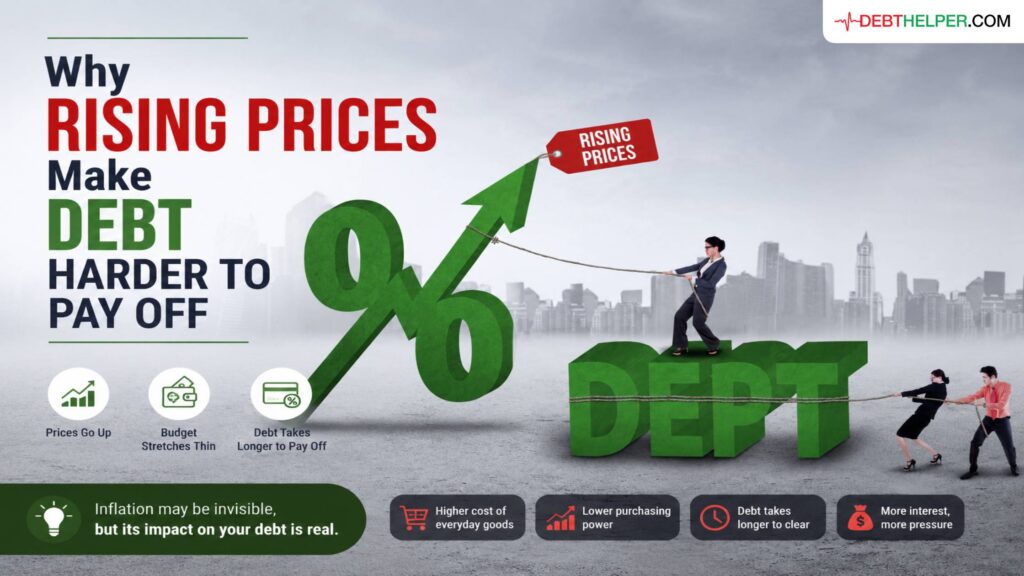
If you feel like you’re doing everything right budgeting, cutting expenses, paying down debt but still falling behind, inflation may be the reason. In today’s economic environment, managing personal finances has become more challenging than ever. Many households are trying to be more disciplined cutting unnecessary expenses, tracking spending and building budgets to stay on top of their finances. Despite these efforts, a large number of people still feel like they are not making real financial progress.
How Does Inflation Affect Debt?
- Increases cost of living
- Reduces money available for debt payments
- Often raises interest rates
- Slows down debt payoff progress
The reason behind this frustration is not a lack of discipline, it is the combined impact of debt and inflation. While budgeting helps control spending, rising prices and ongoing debt obligations can quietly cancel out any gains, making it harder to move forward financially.
Understanding how these two factors interact is essential for building a stronger and more resilient financial strategy.
Understanding the Impact of Inflation
According to the USDA, Inflation has increased grocery costs by 2.4%. Inflation refers to the gradual increase in the prices of goods and services over time. As inflation rises, the cost of everyday essentials such as groceries, fuel, housing, healthcare and utilities also increases.
Even if your income remains stable, your purchasing power decreases. This means the same amount of money can buy fewer goods and services than before. For households already operating on tight budgets, this creates immediate pressure.
For example, a monthly grocery bill that was manageable a year ago may now take up a larger portion of your income. Similarly, rising fuel or rent costs can leave less room for savings or discretionary spending.
Inflation does not just increase expenses it reduces your ability to save and invest, which can have long-term financial consequences.
Does Inflation Help or Hurt Debt?
Credit card APRs now average ~20%+ Debt adds another layer of complexity to financial management, especially during periods of high inflation. Monthly obligations such as credit card payments, personal loans, or EMIs remain fixed or even increase, depending on interest rates.
At the same time, your day-to-day expenses are rising. This creates a situation where a larger portion of your income is consumed by basic needs, leaving less room to manage or reduce debt.
In many cases, individuals may turn to additional borrowing to cover short-term expenses. While this may provide temporary relief, it increases the overall debt burden and creates additional financial stress in the long run.
The Hidden Erosion of Budget Gains
Many people believe that strict budgeting is enough to improve financial health. While budgeting is a powerful tool, it has limitations especially in an inflationary environment.
You may successfully cut back on discretionary expenses such as dining out or entertainment and manage to save a fixed amount each month. However, if the cost of essentials continues to rise, those savings can quickly disappear.
At the same time, interest on existing debt continues to accumulate. This means that even if you are making regular payments, a significant portion may go toward interest rather than reducing the principal.
This creates a frustrating situation where, despite consistent effort and discipline, there is little visible progress in your financial position.
Rising Interest Rates and Their Effect
Inflation is often accompanied by rising interest rates. Interest rate hikes can increase monthly payments by 1-10% or more. Central banks increase interest rates to control inflation, but this has a direct impact on borrowers.
Credit cards, personal loans, and variable-rate loans become more expensive. Monthly payments may increase and the total cost of borrowing rises.
As interest rates go up, a larger portion of your payment is allocated toward interest rather than reducing the principal balance. This slows down debt repayment and makes it more difficult to achieve financial freedom.
The Debt Cycle in an Inflationary Economy
The combination of rising costs and increasing debt can create a challenging financial cycle that is difficult to break:
- Higher living expenses reduce available income
- Limited funds make it harder to pay off existing debt
- Increased reliance on credit to manage daily expenses
- Growing debt due to interest charges and fees
Over time, this cycle can lead to financial stress, reduced savings and long-term instability. Without proper intervention, it becomes increasingly difficult to regain control.
Why Budgeting Alone Is Not Enough
Budgeting is an essential part of financial management, but it is not a complete solution especially during periods of inflation.
Why Your Budget Feels Broken
- Before inflation:
- Rent: $1,200
- Groceries: $400
- After inflation:
- Rent: $1,400
- Groceries: $550
A static budget does not account for changing prices, unexpected expenses, or fluctuating income. As costs increase, a fixed budget may quickly become outdated and ineffective.
To truly manage finances in today’s environment, individuals need to go beyond basic budgeting and adopt a more flexible and proactive approach.
How to Adjust Your Budget for Rising Prices
While debt and inflation present significant challenges, there are practical steps you can take to protect your financial stability and regain control.
1. Prioritize Essential Spending
Focus on covering necessary expenses such as housing, food, utilities and healthcare. Ensuring that these needs are met should always be the top priority.
2. Use Hardship Programs
High-interest debt, especially credit card balances, can quickly become unmanageable. Paying down these debts should be a key focus, as it reduces financial pressure over time. Ask your creditor for available hardship programs.
3. Adjust Your Budget Regularly
In a changing economic environment, your budget should not remain static. Regularly review and update it to reflect current expenses and priorities.
4. Build an Emergency Fund
An emergency fund acts as a financial safety net. It helps you handle unexpected expenses without relying on credit, reducing the risk of falling deeper into debt.
5. Refinance or Restructure Debt
If managing multiple debts becomes overwhelming, consider structured solutions such as debt consolidation or a Debt Management Plan. These options can simplify payments and make them more manageable.
6. Increase Income Streams
If possible, explore additional sources of income. Even a small increase in earnings can help offset rising costs and improve financial flexibility.
The Role of Financial Awareness
Financial awareness is one of the most powerful tools for navigating economic challenges. Understanding how inflation and debt interact allows individuals to make better decisions and avoid common pitfalls.
By staying informed, you can identify risks early, adjust your strategies, and take proactive steps to protect your finances.
Financial literacy goes beyond budgeting; it includes understanding interest rates, debt management, savings strategies and long-term planning.
Long-Term Financial Stability
Achieving financial stability in an inflationary environment requires a combination of discipline, flexibility, and strategic planning.
It’s important to focus not only on short-term survival but also on long-term growth. This includes building savings, reducing debt, and making informed financial decisions.
Small, consistent actions can lead to significant improvements over time. The key is to stay proactive and adapt to changing conditions.
Final Thoughts
Debt and inflation together create a powerful financial challenge that can quietly erode your progress. While budgeting remains an important tool, it is not enough on its own to overcome rising costs and increasing debt obligations.
By understanding the impact of inflation, reducing high-interest debt and adopting flexible financial strategies, individuals can regain control over their finances.
In a world where prices continue to rise, smart financial planning is not just about saving money, it’s about staying ahead of the challenges that threaten your financial stability.
FAQs
- Does inflation make debt easier or harder to pay off?
Inflation increases the cost of living, reducing purchasing power and making it harder to save. - How do I manage debt during inflation?
Expenses rise while debt payments remain, leaving less income available for repayment. Take time to rebudget expenses or seek assistance from a professional credit counselor for tips and strategies. - Do interest rates increase during inflation?
Often yes, which can make borrowing more expensive. - Why is my budget not working anymore?
Budgeting helps, but additional strategies like debt reduction and financial planning are also important. - What is a Debt Management Plan?
It is a structured repayment program that helps individuals manage and pay off debt more efficiently.